
A Family Holiday in Spain Is GCSE Spanish Speaking Practice — If You Do These 10 Things
Written by Ana-Maria Ciui, a GCSE Spanish teacher and speaking examiner, this article gives ten specific things a family can do while on holiday in Spain that build the skills assessed in the GCSE speaking exam. It also explains what recently changed in the exam and why spontaneous speech now matters more.

You have already booked it. The flights, the apartment, the ten days somewhere warm with a pool and too much sun cream. Somewhere in the house there is a Year 10 who has just finished their exams, who will spend most of those ten days horizontal, and who will sit their GCSE Spanish next summer.
Here is the thing almost no parent has been told: the holiday you have already paid for is the single best speaking practice your child can get. Not because you are going to make them revise on the beach. You are not. But because the GCSE changed — and it changed in a direction that makes a real Spanish holiday worth more than an evening with a vocabulary list.
I teach Spanish, and I have read the new specifications end to end. Let me tell you what changed, and then let me give you ten things to do that cost nothing, take minutes, and will not start an argument.
What changed in the exam
The GCSE was reformed. The new specifications were taught from September 2024, and the first examinations were sat in summer 2026. Students beginning Year 11 in September 2026 will sit the reformed examination in summer 2027.
For Pearson Edexcel, the speaking assessment is worth 25% of the GCSE and is built around three tasks: a read-aloud task, a role play and a picture task followed by conversation. Other examination boards organise their speaking assessments slightly differently, so parents should check which board their child is studying.
Read those three tasks again, and think about what a holiday actually consists of.
For Pearson Edexcel, the role play is set in a transactional situation — a shop, a café, a station, a pharmacy. That is not an exercise. That is Tuesday.
The read-aloud is there to check whether a student knows how Spanish letters actually sound: that c and z are not English sounds, that ll and ñ and j behave in ways English never prepares you for, that the h is silent. A menu is a reading-aloud task with olives next to it.
And the conversation is the part that matters most, because of what it no longer allows.
Prepared language still helps, but students must be able to adapt it, answer follow-up questions and recover when the conversation moves away from their prepared response.
That is the real change, and it is the one that should make a parent look differently at ten days in Spain. What is rewarded now is a student who can hear a question they did not expect and say something. Anything. Fluently enough, quickly enough, with an opinion attached.
You cannot cram that. You can only use it.
Ten things to do in Spain
None of these is homework. Nobody needs a pen. Most take under a minute, and every one of them is a rehearsal for a task in the exam.
-
1Stop ordering for them
This is the whole article in one instruction. You order for yourself; they order for themselves. Do not translate, do not rescue, do not fill the silence. Let it be slightly awkward. The awkwardness is the exercise.
Para mí, el pollo, por favor.
Role play -
2Make them ask for something that isn’t on the table
Water, bread, the bill, another fork. In the role play, students may be asked to ask a question rather than only answer one. Asking is a different muscle, and most students have never used it outside a classroom.
¿Nos trae la cuenta, por favor?
¿Tiene pan?
Role play · asking a question -
3Hand over the tickets
Bus, metro, museum, sunbeds. Two tickets, one adult, one child, return not single. Numbers under pressure, in a queue, with someone waiting behind you — that is precisely the condition the exam recreates.
Dos billetes de ida y vuelta, por favor.
Role play · numbers -
4Get properly lost, on purpose
Put the phone away and have them ask a stranger. The point is not the directions. The point is that they will not understand the whole answer, and they will have to cope — which is exactly what an unseen question feels like.
Perdone, ¿dónde está la playa?
¿Puede repetir, más despacio?
Conversation · coping strategies -
5Read the menu out loud
Before anyone orders, they read three dishes aloud. That is the read-aloud task, with churros. Listen for the sounds English gets wrong: gazpacho, paella, jamón, cerveza, ajo.
jamón · paella · cerveza · ajo
Read aloud · phonics
 The exam calls it a role play in a transactional setting. Everyone else calls it lunch.
-
6Send them into the farmacia
Sun cream, plasters, something for a headache. A role play with an actual problem to solve and a real consequence if it goes wrong — which is more motivating than any worksheet I have ever set.
Necesito crema solar, factor cincuenta.
Role play · transactional -
7Ask “why” at dinner
Not “did you like it” — why. An opinion with a reason attached is worth more marks than a perfect sentence with nothing behind it. Get them used to never stopping at “sí”.
Me gustó porque…
No me gustó nada porque…
Conversation · opinion + justification -
8Describe the photo they just took
They will take four hundred. Pick one, and ask: what is happening in it? Who is there, what are they doing, what is the weather like? That is essentially the picture task, and they can practise it in the queue for ice cream.
En esta foto hay… · Están…
Picture task -
9Write down one thing you hear
A station announcement, a football score, the daily special on a chalkboard. Have them write it as they hear it. In the reformed GCSE, Listening now contains a dictation section — students transcribe spoken Spanish into written Spanish — and almost nobody is practising it.
Listening · dictation
-
10Let them get it wrong in front of you
This is the hardest one, and it is the one that matters. A teenager who is allowed to be clumsy in a café in July becomes a teenager who is not frightened in a speaking exam in May. Confidence is not a personality trait. It is a memory of having survived it before.
All of it
And then September comes
Here is the honest part, and it is the reason I wrote this.
Ten days in Spain will do something no revision guide can: it will prove to your child that the Spanish in their head is real — that it buys ice cream, finds a beach, gets the sun cream. That is worth more than a term of vocabulary tests, and it costs you nothing you have not already spent.
But a holiday is not a syllabus. It will not teach them the tenses they are missing, or the vocabulary the reformed GCSE is built on, or how to structure a piece of writing under time. It gives them the confidence. It does not give them the content.
That is the bit that starts in September — and Year 11 is short. It is genuinely short: a couple of terms, mock exams inside them, and then it is May.
That is where structured teaching takes over.
The Ciui Training Spanish GCSE course for Years 10 and 11 provides the structured second half of that journey. It is built around the reformed specification and includes guided lessons, examination practice, speaking activities, audio support and vocabulary development.
For now, though: go. Sit in the sun. Let them order the churros.
Common questions
- How can a holiday in Spain help with GCSE Spanish?
- The GCSE speaking exam rewards spontaneous, unscripted speech. Ordering food, asking for directions and making small purchases in Spanish give exactly that practice, in situations that cannot be rehearsed word for word.
Related Blogs
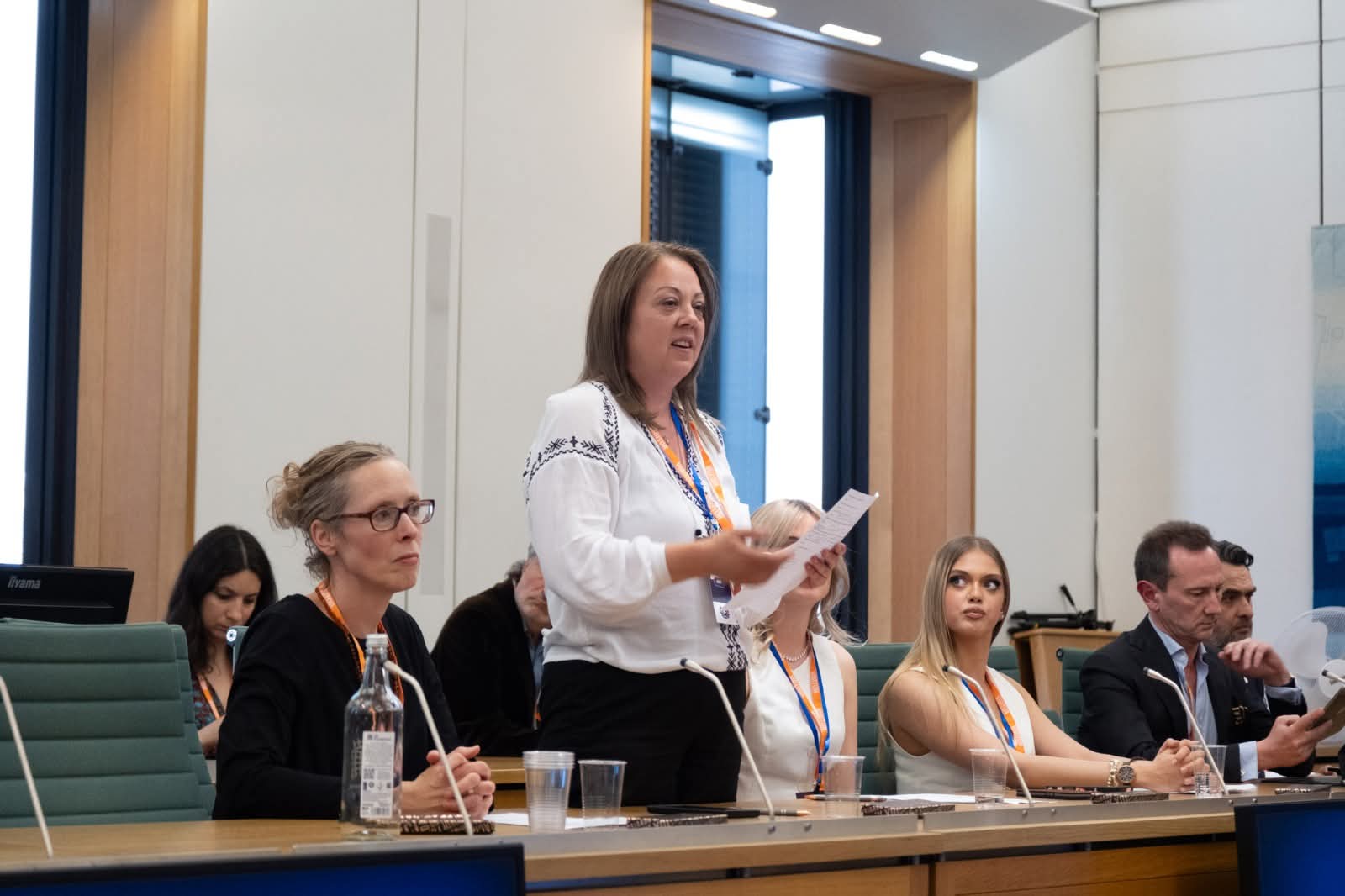 Romanian GCSE UK: Why Thousands of Romanian Children Deserve Recognition for Their Language
Written by Ana-Maria Ciui, a GCSE examiner and language teacher born in Romania, this article argues that Roma...
Jun 9, 2026
Romanian GCSE UK: Why Thousands of Romanian Children Deserve Recognition for Their Language
Written by Ana-Maria Ciui, a GCSE examiner and language teacher born in Romania, this article argues that Roma...
Jun 9, 2026
 How to Actually Revise for GCSE Spanish — Without the Overwhelm
A revision guide for GCSE Spanish that explains why re-reading vocabulary lists is ineffective and what to do...
Jul 25, 2026
How to Actually Revise for GCSE Spanish — Without the Overwhelm
A revision guide for GCSE Spanish that explains why re-reading vocabulary lists is ineffective and what to do...
Jul 25, 2026
 The Summer Slide Is Real: How to Keep Your Teen GCSE-Ready in Just 20 Minutes a Day
This article explains the 'summer slide' — the loss of learning over a long school break — and why it matters...
Jul 22, 2026
The Summer Slide Is Real: How to Keep Your Teen GCSE-Ready in Just 20 Minutes a Day
This article explains the 'summer slide' — the loss of learning over a long school break — and why it matters...
Jul 22, 2026