
Feeling Confident at School as an EAL Student
Written for pupils who are new to a UK school and do not have English as a first language, this article gives practical confidence-building steps: speaking up in class despite the fear of mistakes, using a simple greeting to start friendships, and treating your home language as an asset rather than a disadvantage.
Feeling Confident at School in a new country can be a little scary, even if it is exciting. Especially if English isn’t your first language, you might worry about making friends, understanding lessons, or speaking in class.
What if I make a mistake?
What if people don’t understand me?
First, take a deep breath. You are not alone. Many students have been in your shoes, and guess what?
They’ve made friends, improved their English, and grown in confidence – and so will you!
Here are some tips to help you feel more at home and ultimately, believe in yourself.
Speak Up – Even If It Feels Scary!
I know, it’s not easy to speak when you’re afraid of making mistakes.
But here’s the truth: mistakes help you learn!
Even native English speakers mess up sometimes, and nobody expects you to be perfect.
“The expert in anything was once a beginner.”
Helen Hayes
Try this!
Challenge yourself to answer just one question in class or say one sentence to a classmate. The more you practice, the easier it gets!
A Simple ‘Hi’ Can Make a Big Difference
Making friends is one of the best ways to feel comfortable at school. But how do you start?
Simple: just say “Hi.”
A smile and a friendly hello can go a long way.
Try this!
Look for someone who also seems a little shy.
They might be waiting for someone like you to talk to them first!
Your Home Language Is a Superpower
Sometimes, students feel embarrassed about speaking their first language at school. Don’t be!
Being bilingual or multilingual is an amazing skill.
You’re not just learning English, you’re adding to the languages you already know.
“With languages, you are at home anywhere.”
Edmund de Waal
Try this!
Use a bilingual dictionary if you need help with new words. And if you meet someone who speaks your language, support each other!
Teaching someone else can help you learn too.
Look at How Far You’ve Come
Learning a new language takes time, and it’s easy to focus on what you don’t know yet.
But take a step back and think about what you do know now compared to when you first started.
“It does not matter how slowly you go as long as you do not stop.”
Confucius
Try this!
Keep a little notebook of new words you learn.
In a few months, you’ll be amazed at how much you’ve improved!
Believe in Yourself – You Belong Here!
Confidence isn’t about knowing everything—it’s about believing that you can learn and improve.
You belong at your school just as much as anyone else.
“Believe you can, and you’re halfway there.”
Theodore Roosevelt
Try this!
When you feel nervous, tell yourself:
“I am learning. I am improving. I can do this.”
The more you believe in yourself, the easier it gets.
You’ve Got This!
Starting something new is always a little scary, but you’re already doing it!
You’re learning, growing, and becoming more confident every day. Keep trying, keep smiling, and never give up.
You’re stronger than you think!
Have you ever felt nervous about speaking English at school?
What helped you feel more confident?
Share your thoughts in the comments, I’d love to hear your story.
Common questions
- Is speaking your home language bad for learning English?
- No. Keeping a strong home language supports rather than hinders learning English — bilingual pupils transfer skills between languages, and losing the first language brings no benefit to the second.
Related Blogs
 Building Confidence and a Growth Mindset as an EAL Student
This article applies growth-mindset thinking to learning English as an Additional Language. It pairs each comm...
Feb 3, 2025
Building Confidence and a Growth Mindset as an EAL Student
This article applies growth-mindset thinking to learning English as an Additional Language. It pairs each comm...
Feb 3, 2025
 Steps to Success: Mastering English as an EAL Student 2026
This guide is for students learning English as an Additional Language (EAL) in a UK school. It covers the four...
Jan 26, 2025
Steps to Success: Mastering English as an EAL Student 2026
This guide is for students learning English as an Additional Language (EAL) in a UK school. It covers the four...
Jan 26, 2025
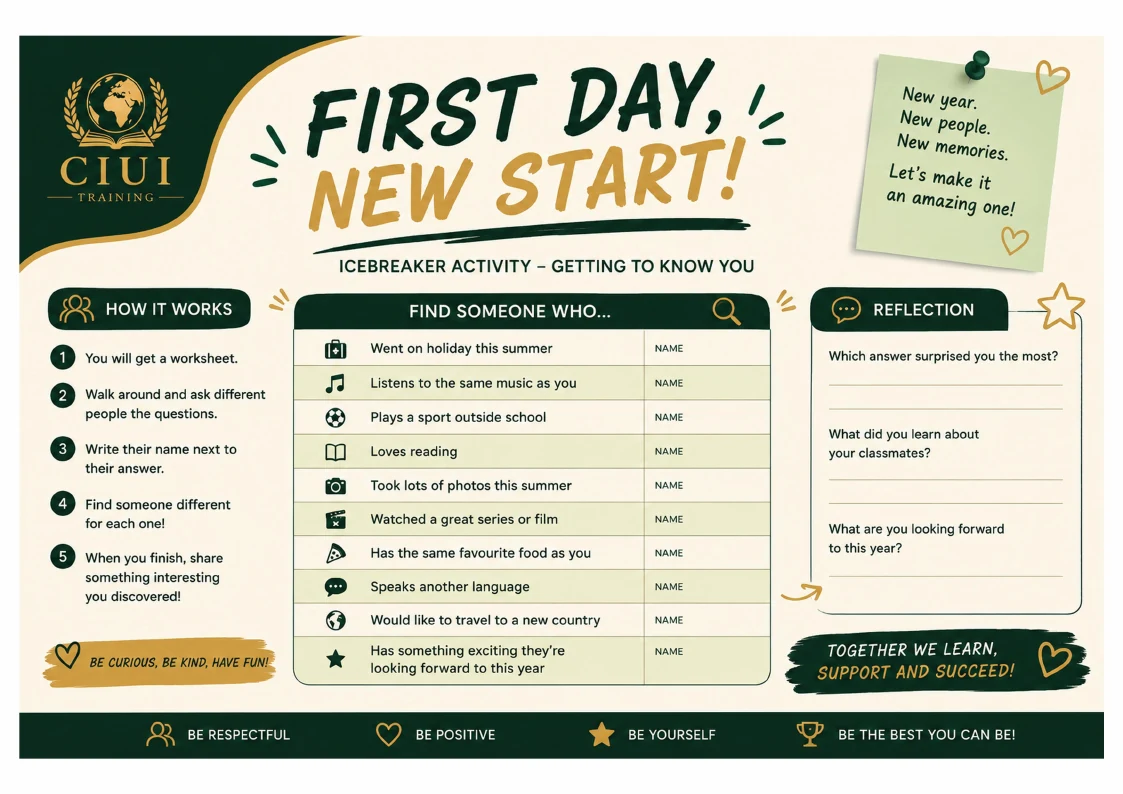 Free Year 7 Icebreaker: ‘First Day, New Start!’ (English, Spanish & French)
A free, printable classroom icebreaker for the first day of Year 7, available in English, Spanish and French....
Jul 25, 2026
Free Year 7 Icebreaker: ‘First Day, New Start!’ (English, Spanish & French)
A free, printable classroom icebreaker for the first day of Year 7, available in English, Spanish and French....
Jul 25, 2026